
Maintenance
Shut-off valves: finding yours before you need them
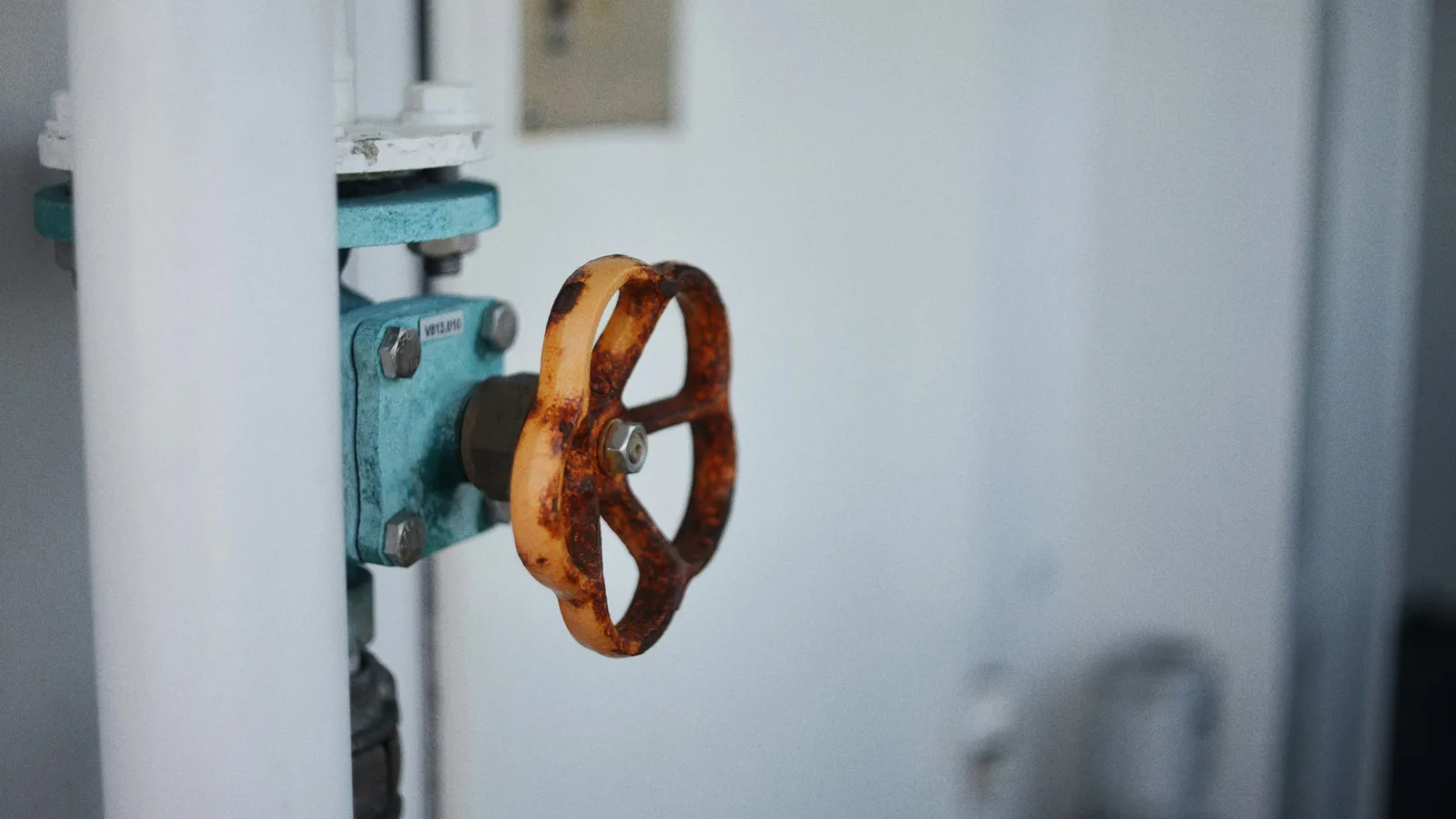
A burst supply line can put hundreds of gallons into a house in the time it takes to search for a valve you have never located. Finding the main water and gas shut-offs takes ten minutes on a calm day and pays for itself once.
Why this is worth ten minutes today
Almost every serious water damage story includes an interval where water was flowing and nobody could stop it. A pipe lets go, a supply hose bursts, a fitting fails, and the difference between a mop-up and an insurance claim is how quickly the flow stopped. That speed is decided entirely by whether someone already knew where the valve was and whether it still turned.
There is a second reason on the North Coast. This is the most seismically active corner of California, where the Mendocino Triple Junction regularly produces earthquakes strong enough to break pipes and shift appliances. After a significant quake, knowing how to shut off water and gas is part of basic household preparedness here, in a way it might not be somewhere quieter.
Start small: the valves at each fixture
Most plumbing emergencies do not need the whole house shut down. Every toilet and sink should have its own small valve, called an angle stop, on the supply line where it comes out of the wall or floor. Turning it clockwise isolates just that fixture and leaves the rest of the house running.
Where the local stops live:
- Toilets: on the wall below and behind the tank, on the supply line
- Sinks: under the basin, one valve for cold and one for hot
- Washing machine: on the wall behind the machine, often a single-lever box with hot and cold together
- Dishwasher: usually under the kitchen sink, on a branch of the hot supply
- Water heater: a valve on the cold inlet at the top of the tank
The main shut-off at the house
This is the valve that stops everything, and it is the one worth physically locating today. It sits where the supply line enters the building. On the raised foundations common across Humboldt, that usually means one of a few places: an exterior wall near a front corner, inside the crawl space near where the line comes up, in a garage or laundry, or occasionally in a dedicated box against the foundation.
- Gate valve
- A round wheel handle that takes several full turns to close. Common on older homes. These are the valves that seize with age or shear their stem, so close one gently and never force it.
- Ball valve
- A lever handle that closes with a quarter turn. The handle parallel to the pipe is open, across the pipe is closed. This is the modern standard, and replacing a tired gate valve with one is a routine upgrade.
Once you have found it:
Test it while nothing is wrong
Close it fully, open a faucet, and confirm the water actually stops. A valve that only slows the flow has failed internally and should be replaced before it is needed in earnest.
Reopen it fully, then back a quarter turn
On a gate valve the quarter turn back keeps the wheel from seizing in the fully open position over the years.
Make it findable by someone else
Tag it, photograph it, and tell everyone in the household where it is. In an emergency the person home may not be the person reading this.
The valve at the meter
If the house valve cannot be found or will not close, the backstop is the valve in the meter box near the street. Most meters have a shut-off on the street side that closes with a quarter turn, and a dedicated meter key or a wrench and a little care will operate it. Water providers generally prefer customers use the house valve, and some districts ask that the meter valve be left to them, so it is worth knowing your provider’s position before an emergency rather than during one.
The gas shut-off, and the one-way rule
The gas shut-off lives at the meter, usually on the supply pipe rising from the ground, ahead of the regulator. The valve is a rectangular tang that turns with a wrench: in line with the pipe is on, a quarter turn to crosswise is off. Keeping a wrench where you can find it in the dark, or a dedicated gas shut-off tool zip-tied near the meter, turns this from a plan into an option.
After an earthquake, the standing advice is to shut the gas off only if you have a reason: the smell of gas, a hissing sound, or visible damage. Shutting it off reflexively after every tremor mostly buys a long wait for the utility to restore service, which matters in a region where small quakes are routine.
The failure the valves are usually for
The most common domestic flood is not a pipe in a wall. It is a washing machine supply hose, a dishwasher connection, a toilet supply line, or an icemaker line, all of which are flexible parts under constant pressure with a service life people rarely think about.
Cheap prevention that outperforms any cleanup:
- Replace rubber washing machine hoses with braided stainless ones, and replace those roughly every ten years
- Replace plastic-nut toilet and faucet connectors showing any cracking or corrosion
- Turn off the washing machine valves when leaving the house empty for more than a few days
- Check the icemaker line behind the fridge the next time it is pulled out for cleaning
If you rent
None of this requires owning the building. Ask where the main water shut-off is when you move in, or find it yourself, and locate the gas meter. Shutting off water to stop active damage is always appropriate for a tenant, and reporting the problem immediately afterward is the other half of the job. The fixture stops are also yours to use: a toilet that will not stop filling is controlled at its own valve without touching anything else.
Common questions
Where the supply line enters the building. On the raised-foundation homes common locally, look on an exterior wall near a front corner, in the crawl space where the line comes up, or in the garage or laundry. If it cannot be found, the meter box near the street has a valve on the street side as a backstop.
Clockwise for wheel-handled gate valves, which take several full turns. Lever-handled ball valves close with a quarter turn, so the handle sits across the pipe rather than along it. Close old valves gently, since a seized gate valve can shear if forced.
Only if there is a reason: a smell of gas, a hissing sound, or visible damage to the building or gas appliances. If you do shut it off, leave restoring it to the gas utility or a professional, since relighting requires checking the whole system.
Do not force it. A seized gate valve can shear its stem, which converts a stuck valve into an emergency. Use the meter valve if water must be stopped now, and have the failed valve replaced. Swapping a worn gate valve for a quarter-turn ball valve is a routine, inexpensive job.
More from the knowledge base
Still stuck?
Describe what you are seeing and we will tell you whether it needs looking at now or can wait.