
Maintenance
The twice-yearly crawl space check for coastal homes
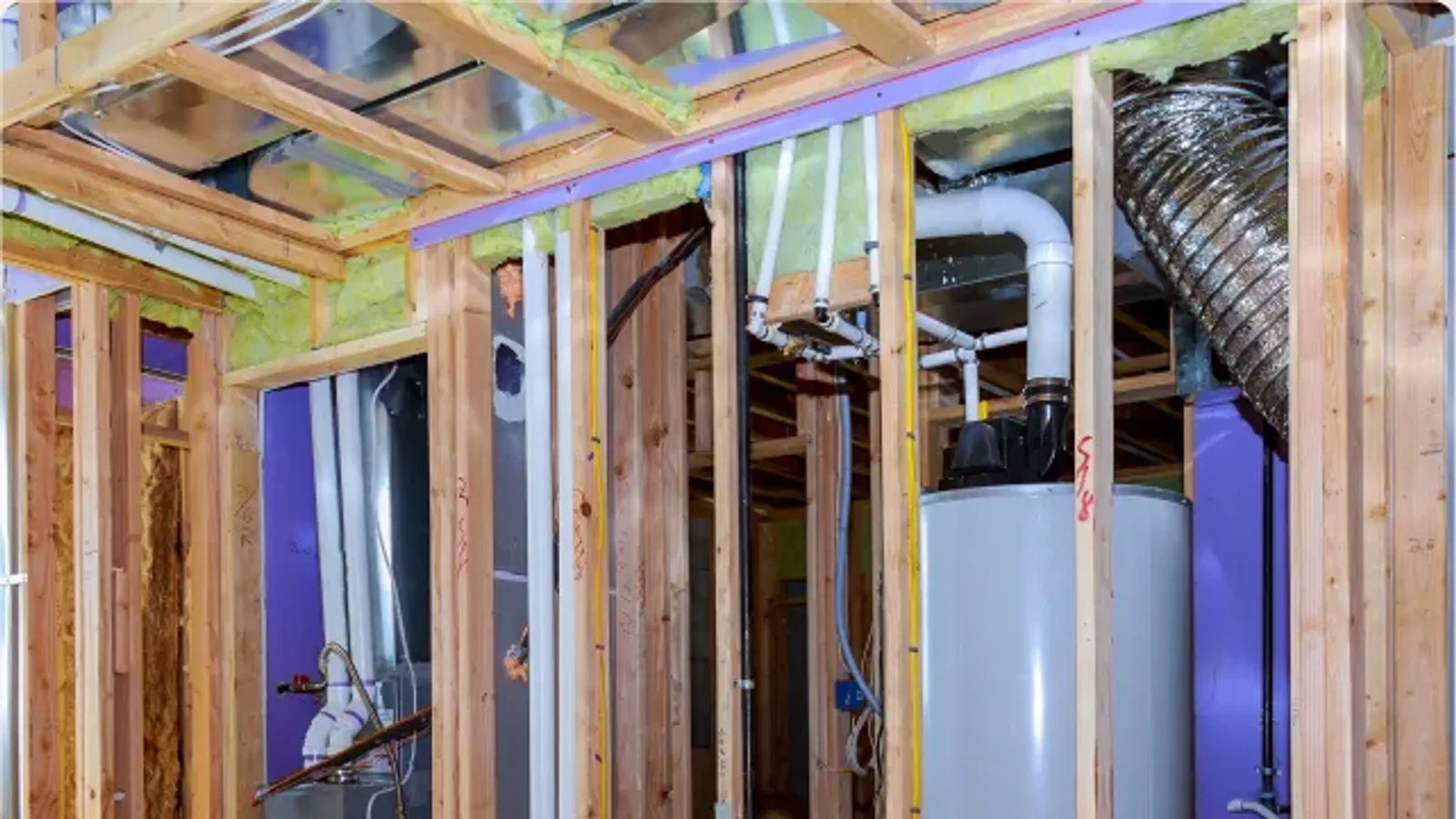
On a raised foundation, nearly every pipe in the house runs through the crawl space, and coastal damp masks the early signs of a leak. A half-hour look twice a year catches most problems while they are still small ones.
Why this matters more here than most places
Most Humboldt homes sit on raised foundations rather than slabs, which means the supply lines, the drain runs, and often the water heater live in the crawl space. That is genuinely good news for repair, since everything is reachable without breaking concrete. It is bad news for detection, because problems develop out of sight in a space nobody visits.
The coastal climate compounds it. A crawl space here is damp for much of the year as a matter of course, so the usual tells of a slow leak, a musty smell and a wet patch, read as normal background. A leak that would announce itself in a week in Redding can run for a year in Eureka. The counter to that is a routine rather than sharper instincts: a look in the fall before the rain starts, and a look in late spring after it stops.
Before you go in
A crawl space inspection is safe with a little sense applied first:
- Do not enter standing water. Water and electrical wiring share crawl spaces, and a flooded one is assessed from the hatch, not from inside.
- Announce yourself. Skunks, raccoons, opossums and cats use crawl spaces, particularly where a vent screen has failed. Shine the light around and give anything living a moment to leave.
- Skip it if sewage is present. Visible waste or a strong sewer smell at the hatch means a broken drain line, and that is a call rather than a crawl.
- Wear what the job implies: old clothes or coveralls, gloves, a head lamp plus a backup light, and a dust mask where the ground is dry.
- Tell someone you are going under the house, which costs nothing and is occasionally very useful.
What to actually look at
Work systematically from where the water enters toward where the waste leaves. The whole circuit takes about half an hour.
The main supply entry and shut-off valve
Find where the water line comes up into the house. Look for corrosion, mineral crust, or damp at the valve and the first fittings. This is also the moment to confirm the shut-off still turns.
Every visible supply run
Follow the pipes with the light. Green or white crust on copper joints, rust weeps on galvanized, and water tracks on the wood above a pipe all mark slow leaks. Run a dry hand or a tissue along suspect fittings; a tissue shows a film of moisture instantly.
The underside of wet rooms
Stand under the kitchen, each bathroom, and the laundry. Staining, swollen subfloor, dripping insulation, or a hanging belly of fallen insulation below a fixture is the classic signature of a fixture or drain leaking above.
The drain runs and their joints
Drain leaks show only when something is draining, so have someone run water and flush toilets while you watch the runs. Look especially where cast iron meets newer plastic and at any joint with old repair clamps on it.
Pipe supports and slope
Drain lines should fall steadily toward the sewer. A strap that has broken or pulled loose lets a section sag, and a sagging section holds water and debris. Sags are cheap to fix when caught and expensive once they become the place every blockage forms.
The ground itself
Read the soil like a map. A single damp depression under a fitting, a channel cut by moving water, or a patch that stays wet in September when everything around it has dried means water is arriving from somewhere. Uniform seasonal damp is the climate; local wet is a finding.
Vents, screens, and the hatch
Foundation vents should be clear and screened. Blocked vents keep the space wetter than it needs to be, which accelerates corrosion on every pipe down there, and torn screens admit the wildlife that chews insulation and PEX.
Telling a leak from ordinary coastal damp
| Observation | Reads as climate | Reads as plumbing |
|---|---|---|
| Distribution | Broad and even across the whole space | Localized, worst at one point with a gradient away from it |
| Season | Tracks the rain, driest in late summer | Persists or grows through the dry months |
| Surface | General condensation on many cold surfaces | Drips, tracks, or crust on one fitting or one run |
| Smell | Even, earthy, musty | Musty with a sharp or sewage note near one spot |
| Wood above | Uniform weathering | A defined stain or soft spot below one fixture |
The season column is the most useful one. Almost everything under a coastal house is damp in February. A wet patch in late September is making a statement, and it is the reason the fall visit comes before the rain: it is the one time of year the ground can only be wet for interesting reasons.
What the rainy season changes
Fifty inches of rain a year has to go somewhere, and in wet months some of it arrives under houses. Seasonal groundwater in a crawl space is a drainage problem rather than a plumbing one, but the two interact: standing water corrodes pipe from the outside, soaks insulation off the lines, floats debris into contact with fittings, and makes every future inspection less pleasant and less likely to happen.
Worth addressing where water appears each winter:
- Gutters and downspouts that discharge against the foundation, which is the most common and cheapest-to-fix source
- Grading that slopes toward the house rather than away
- A vapor barrier over the soil, which keeps ground moisture out of the air and off the pipes
- A sump or drainage path where water reliably ponds, which is a contractor conversation
Winter is also when saturated ground moves, and moving ground is what opens joints in old clay and cast iron. A house whose drains behave differently after a wet winter, slower, noisier, or smellier, is describing that movement, and a camera inspection of the lateral is the way to see what shifted.
Findings that end the inspection
Some discoveries mean stop looking and start calling:
- Any active drip or spray from a supply line, which only grows
- Sewage on the ground or waste staining below a drain joint
- A supply line or water heater connection showing corrosion deep enough to flake
- Chewed pipe insulation or PEX, which means both a plumbing and a wildlife job
- Widespread soft or stained subfloor under a bathroom, where the repair conversation is better had early
- A smell of gas anywhere under the house, which means leaving under the house immediately and calling from outside
Common questions
Twice a year: once in the fall before the rain starts, and once in late spring after it stops. The fall visit is the more diagnostic one, since late summer is the only time the ground under a coastal house is reliably dry, and anything wet then has a reason.
Broad, even, seasonal damp is normal here. What is not normal is localized wetness at one fitting or one patch of soil, damp that persists through the dry months, or a defined stain in the wood below a fixture. Distribution and season separate climate from plumbing.
It is common and it is still worth fixing, because standing water corrodes pipes, ruins insulation, and hides real leaks. Start with gutters, downspouts, and grading, which cause most of it, and treat persistent ponding as a drainage project.
An even musty smell is the climate. A sewage note concentrated near one spot suggests a drain leak or breach, and warrants inspection from the hatch rather than entry if it is strong. Any gas smell means leave immediately and call from outside.
More from the knowledge base
Still stuck?
Describe what you are seeing and we will tell you whether it needs looking at now or can wait.