
Diagnostics
Using your water meter to find and size a leak
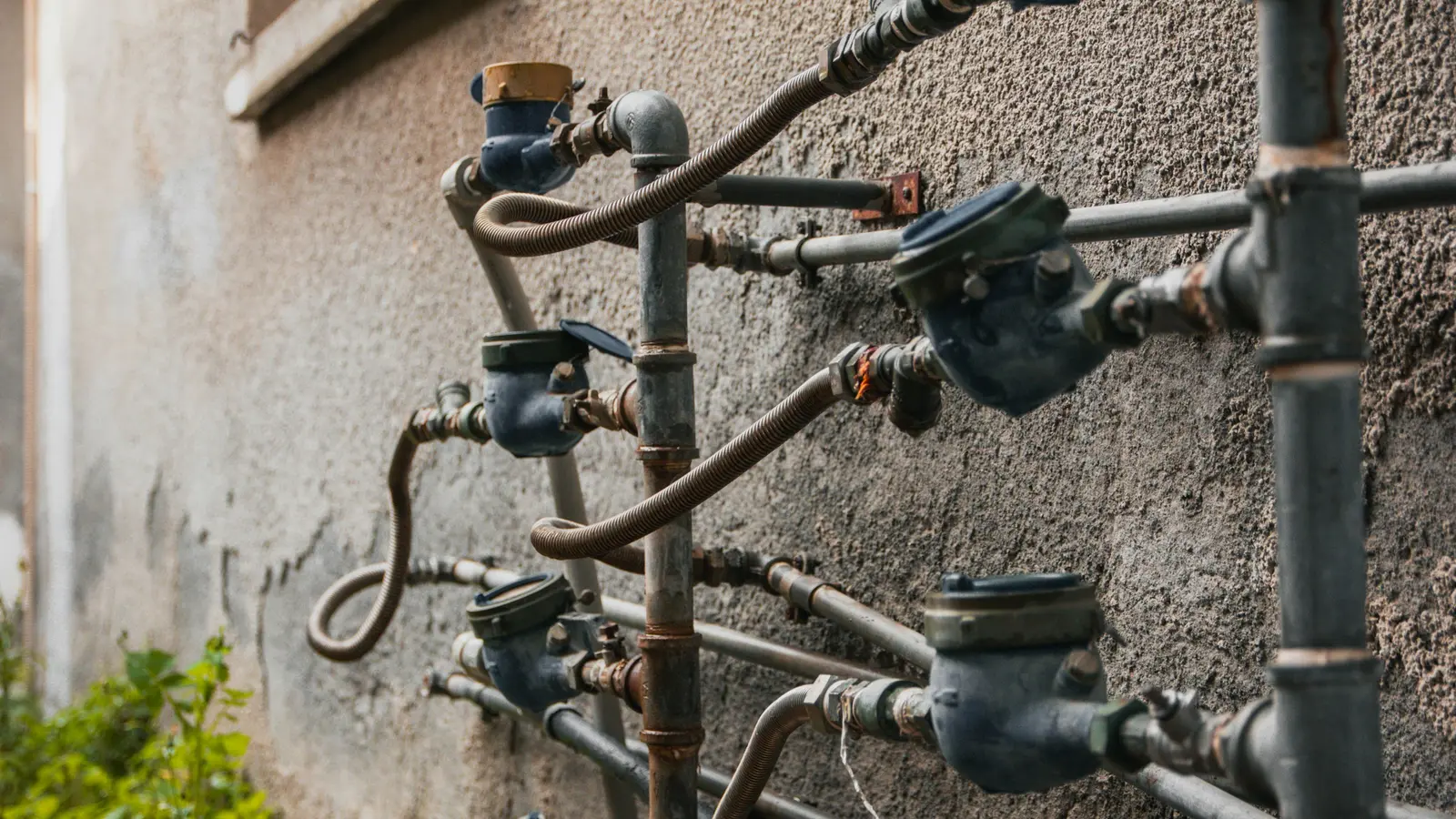
If the meter records any use while every fixture in the house is off, water is escaping somewhere. The test takes about twenty minutes and needs no tools.
Why the meter is the starting point
A leak that is visible has already been diagnosed. The difficult ones are behind drywall, under a slab, or beneath a raised floor, and the usual signs of those are indirect: a bill that climbed for no reason, a hot spot on the floor, a musty patch of crawl space, the sound of water moving when nothing is running.
The meter converts all of that into a yes or no. It measures every drop entering the property, so if it advances while nothing is drawing water, the water is going somewhere unintended. That answer is worth having before anyone starts cutting.
Running the test
The meter usually sits near the street in a concrete or plastic box at ground level. The lid often needs a screwdriver to lever up.
Turn off everything that uses water
Faucets, showers, the dishwasher, the washing machine, irrigation, and any ice maker or humidifier. Ice makers and irrigation timers are the two that most often run mid-test and produce a false positive.
Find the leak indicator
Most meters have a small triangle, star, or gear alongside the main dial. It is geared to spin on very low flow, far below what moves the main register. On a digital meter the same job is done by a faucet icon or a flashing indicator.
Watch it for a minute
Any movement at all, however slow, means water is flowing. If it is turning, you have your answer and can skip ahead to isolating the leak.
If it is still, record the reading and wait
Photograph the dial. Leave the house undisturbed for one to two hours, then read it again. This catches leaks too small to visibly turn the indicator, such as a slow toilet flapper that seeps rather than runs.
Compare the two readings
Any change over a period when nothing was used is a leak. If the readings match exactly, the supply side is sound and the problem is elsewhere.
Reading the number
Meters in this area generally register in cubic feet. That is an awkward unit for judging severity, so it is worth converting: one cubic foot is about 7.48 gallons. A meter that has advanced by one cubic foot in two idle hours is losing roughly 90 gallons a day.
| Advance over 2 idle hours | Approximate gallons per day | Typical cause at this scale |
|---|---|---|
| Indicator barely creeps | Under 20 | Seeping toilet flapper, dripping outdoor faucet |
| 0.1 cubic feet | About 9 | Small fixture or valve seep |
| 1 cubic foot | About 90 | Running toilet, failed water heater relief valve |
| 5 cubic feet | About 450 | Supply line leak, irrigation break, slab leak |
| Indicator spins steadily | Thousands | Burst or disconnected line. Shut the main and call. |
Narrowing it to one side of the house
Once a leak is confirmed, the next question is whether it sits between the meter and the building, or inside. That single distinction changes both who is responsible and what the repair looks like, so it is worth answering before anything else.
Close the main shut-off valve at the house
This is the valve where the supply enters the building, not the one at the meter. On a raised foundation it is often in the crawl space or on an exterior wall near the front.
Return to the meter and watch the indicator
Give it a few minutes. The house is now isolated from the supply line.
Interpret what it does
Still moving means the leak is in the buried service line between meter and house. Stopped means the leak is inside the building or under the slab.
Ruling out the toilets first
Toilets are the single most common source of a confirmed meter leak, and they are the cheapest to rule out. A worn flapper lets tank water seep into the bowl continuously, often with no sound at all.
Put a few drops of food coloring in the tank
The tank is the upper reservoir, not the bowl. Do not flush.
Wait fifteen to twenty minutes
Leave the toilet completely unused during this time.
Look in the bowl
Color in the bowl means the flapper is passing water. Repeat for every toilet in the house, since more than one can be seeping at once.
A flapper is an inexpensive part and a routine replacement. It is worth doing before pursuing anything more invasive, because a seeping toilet will mask a second, smaller leak elsewhere in the same test.
What the meter cannot tell you
The meter proves a leak exists and narrows it to one side of the house. It cannot locate it. Finding the actual point on a buried or concealed line is done with acoustic listening equipment, pressure testing, or thermal imaging, which is where a leak detection visit starts.
Worth stopping the test and calling straight away if:
- The indicator is spinning quickly rather than creeping
- You can hear water running inside a wall or under the floor
- There is a warm patch on a slab floor, which suggests a hot line
- Water is surfacing in the yard or at the curb
- The meter box itself is full of water
Common questions
It should not. The indicator is geared to respond to very low flow, so any movement while every fixture is off means water is leaving the system somewhere.
The buried service line from the meter to the building is generally the property owner’s responsibility, while the main and the meter itself belong to the water provider. Confirm with your provider, since the boundary varies between districts.
Yes. Digital meters show flow with a faucet symbol or a flashing indicator instead of a spinning triangle. Some sleep between readings and need a light shone on the panel or a moment to wake before they display.
More from the knowledge base
Still stuck?
Describe what you are seeing and we will tell you whether it needs looking at now or can wait.