
Diagnostics
No hot water: working out what failed
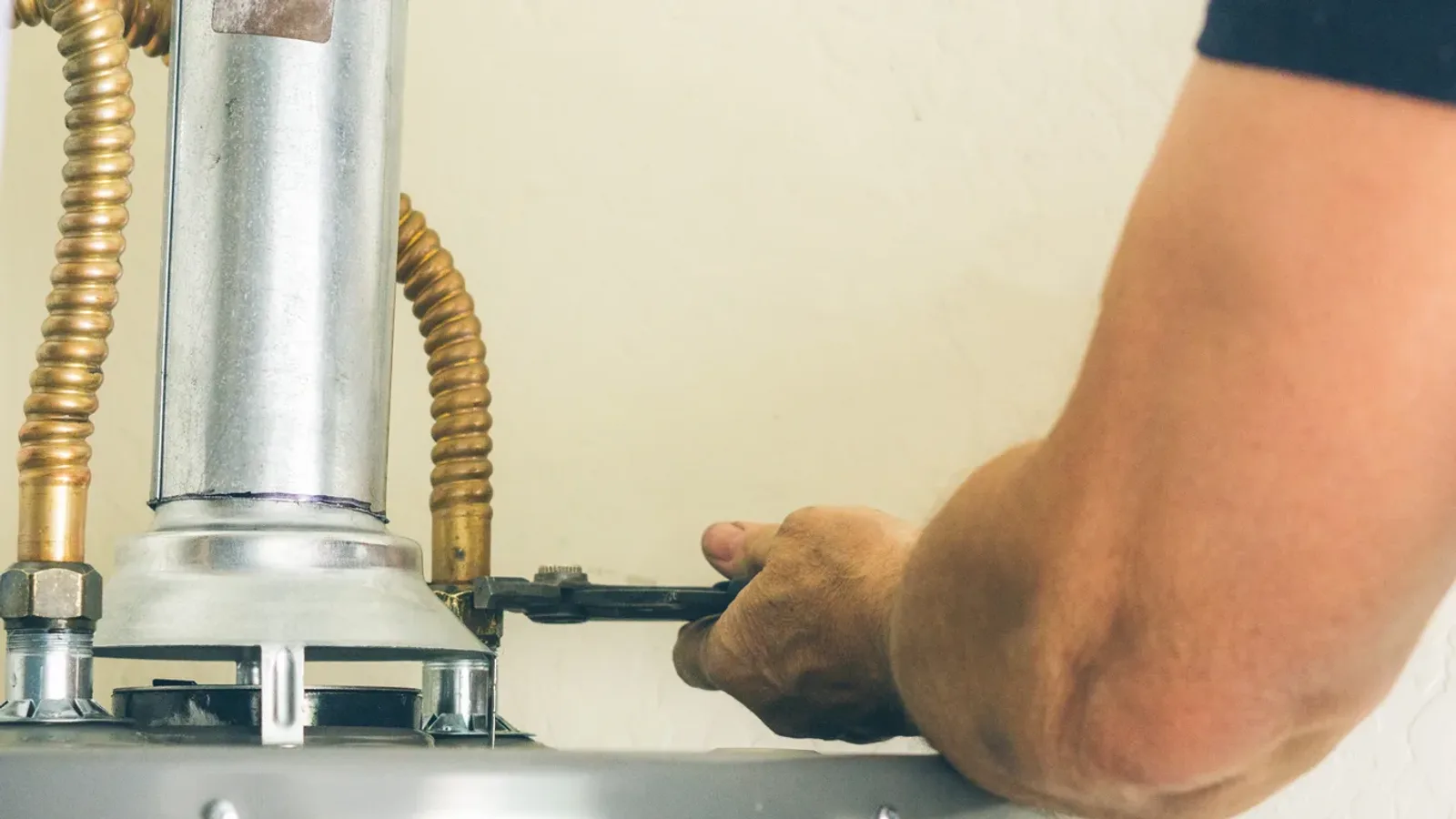
How the hot water failed narrows the cause faster than anything else. None at all points at the heat source, lukewarm points at a thermostat or dip tube, and hot that runs out early points at capacity or sediment.
Before anything else
Start with the pattern
| Symptom | Likely on gas | Likely on electric |
|---|---|---|
| No hot water at all | Pilot out, failed thermocouple, gas supply, or gas control valve | Tripped breaker, tripped high-limit cut-out, or failed upper element |
| Lukewarm only, never properly hot | Thermostat setting, or a burner not firing fully | Failed upper element or thermostat |
| Hot at first, runs cold quickly | Sediment reducing effective capacity, or a broken dip tube | Failed lower element, or a broken dip tube |
| Rumbling or popping from the tank | Sediment on the tank floor boiling beneath the burner | Sediment around the lower element |
| Hot water discolored or smells | Anode rod depleted, or tank corrosion | Anode rod depleted, or tank corrosion |
| Recovers very slowly after use | Undersized for demand, sediment, or partial burner failure | One element failed, leaving the other doing all the work |
Gas tank heaters
A gas heater has a burner under the tank and a pilot or igniter to light it. The most common cause of no hot water is that the burner is not lighting, and the most common cause of that is the thermocouple.
- Thermocouple
- A small sensor sitting in the pilot flame. It generates a tiny current that tells the gas valve the pilot is lit. When it weakens with age, the valve shuts the gas off as a safety measure, and the pilot will light but not stay lit.
- Gas control valve
- The combined thermostat and safety shut-off on the front of the tank. It fails less often than the thermocouple but is the next suspect when the pilot holds and the burner still will not fire.
What is worth checking:
- Whether the pilot is lit, through the sight glass near the base
- Whether the gas supply valve to the heater is fully open
- Whether other gas appliances in the house are working, which separates a heater fault from a supply problem
- Whether the control dial has been knocked to pilot or vacation mode
A pilot that lights and then goes out within a minute of releasing the control is the classic thermocouple signature. A pilot that will not light at all, with gas confirmed on, points further upstream. If the pilot goes out repeatedly over days or weeks, that is worth investigating rather than relighting each time, because a downdraft or venting problem can cause it and that is a combustion safety issue.
Electric tank heaters
An electric heater has two heating elements, upper and lower, each with its own thermostat. The upper element heats the top of the tank first, so the two elements produce distinctly different symptoms when they fail.
How the failure pattern maps to the part:
- Upper element failed: little or no hot water at all, since the top of the tank never heats
- Lower element failed: hot water available but a much smaller amount than usual, running cold quickly
- Both thermostats reading incorrectly: water far hotter or cooler than the setpoint
There is also a high-limit cut-out, often called the ECO, behind the upper access panel. It is a red reset button that trips when the water gets dangerously hot, and once tripped the heater is dead until it is reset.
Causes common to both
Two failures produce identical symptoms regardless of fuel, and both get misdiagnosed as a dying heater.
- Broken dip tube
- The dip tube carries incoming cold water to the bottom of the tank so it heats before rising. When it cracks or breaks, cold water enters at the top and mixes straight into the outgoing supply. The result is water that is lukewarm at best and runs cold far sooner than it should, from a heater that is otherwise working perfectly.
- Sediment accumulation
- Minerals settle out of the water and build up on the tank floor. On a gas heater that layer insulates the water from the burner beneath it, and the popping or rumbling is water boiling trapped underneath. On an electric heater it buries the lower element. Either way it takes up volume that used to hold hot water.
Sediment is the reason an annual flush matters, and it is much more relevant in the harder-water parts of the county. It is also cumulative: a tank that has never been flushed in ten years has lost real capacity, which is often the actual explanation for a household that has apparently outgrown its heater.
A note on temperature setting
If the water is simply not as hot as it used to be, the setpoint is worth checking before anything is diagnosed. Dials get knocked, and a replacement heater is often delivered at a lower default than the one it replaced.
The usual recommendation is around 120°F. That is a deliberate compromise: hotter water scalds faster, and the margin is much tighter than most people expect. At 120°F a serious burn takes minutes of contact, while at 140°F it takes seconds, which matters a great deal in a house with young children or elderly residents.
Whether it is worth repairing
A conventional tank heater generally lasts somewhere between eight and twelve years. The manufacture date is usually encoded in the serial number on the data plate, and most manufacturers publish how to read it.
Repair is usually the sensible answer when:
- The tank is under about eight years old and the fault is a specific component
- The failure is a thermocouple, element, thermostat, or dip tube
- There is no sign of corrosion or leakage from the tank body
Replacement is usually the sensible answer when:
- The tank itself is leaking, which is not repairable
- It is past ten to twelve years and needs a significant part
- It has already had multiple component failures
- Capacity no longer matches the household regardless of condition
Common questions
A pilot that lights but will not stay lit most often means a failing thermocouple, the sensor that tells the gas valve the pilot is burning. Repeated outages over days or weeks can also indicate a venting or draft problem, which is a combustion safety issue and worth investigating rather than simply relighting.
On an electric heater this usually points at a failed upper element or thermostat. On either fuel type it can also be a broken dip tube, which lets incoming cold water mix directly into the outgoing hot supply. Check the thermostat setting first, since it is free to rule out.
Around 120°F is the common recommendation, balancing scald risk against bacterial growth in stored water. The difference matters: a serious burn takes minutes at 120°F but only seconds at 140°F. Where hotter storage is wanted, a thermostatic mixing valve delivers safe water to the faucets.
A conventional tank heater generally lasts eight to twelve years. The manufacture date is normally encoded in the serial number on the data plate. Past about ten years, a significant repair is usually worth weighing against replacement.
More from the knowledge base
Still stuck?
Describe what you are seeing and we will tell you whether it needs looking at now or can wait.