
Systems and materials
Water pressure: normal ranges and what changes them
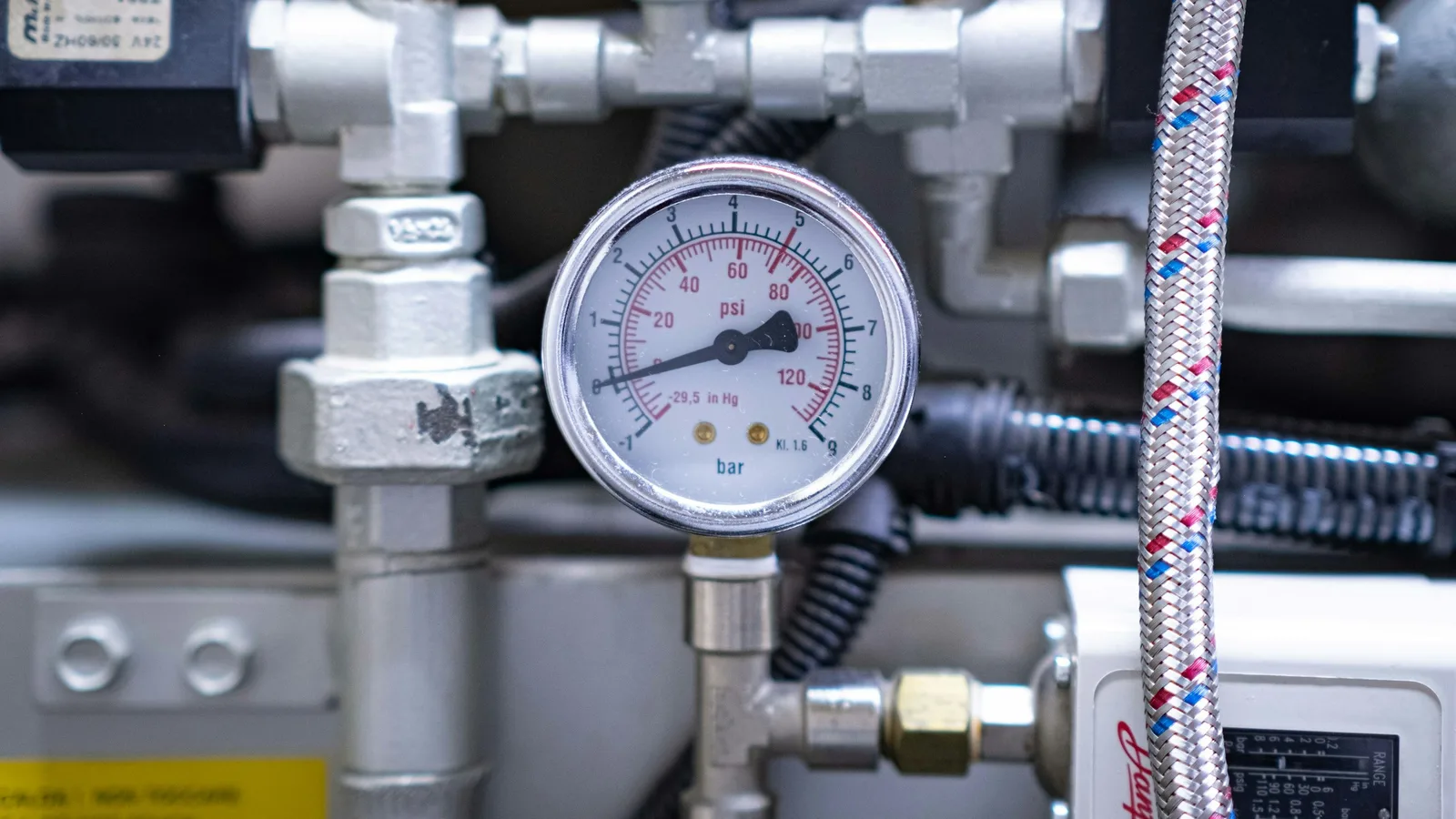
Household water pressure normally sits between 40 and 80 psi. Above 80 psi it damages appliances and causes leaks, and plumbing codes generally require a regulator to bring it back down.
Pressure and flow are not the same thing
These get used interchangeably and they describe different problems with different causes. Separating them is the first step in diagnosing a complaint about weak water.
- Pressure
- Force, measured in psi. It is what pushes water through the system, and it is roughly the same everywhere on a given floor of the building.
- Flow rate
- Volume over time, measured in gallons per minute. It depends on pressure, but also on pipe diameter, internal corrosion, and how many fixtures are open at once.
The practical distinction: if one faucet is weak and the rest are fine, pressure is not the problem, because pressure is shared. That is a flow problem local to the fixture, usually a blocked aerator or a partly closed supply valve. If every fixture in the house is weak at once, then pressure is a genuine suspect.
What the number should be
| Reading | Assessment | Consequence |
|---|---|---|
| Below 30 psi | Too low | Noticeably weak at fixtures. Showers and appliances underperform. |
| 40 to 60 psi | Ideal | Good performance with no undue stress on the system. |
| 60 to 80 psi | Acceptable | Fine, though the upper end shortens appliance life over time. |
| Above 80 psi | Too high | Accelerates leaks, stresses fittings and appliance valves. Codes generally require a regulator. |
| Above 100 psi | Damaging | Real risk to supply lines, water heater, and appliance inlet valves. |
Measuring it
A screw-on pressure gauge costs very little at any hardware store and answers the question definitively in under a minute. It is the single most useful diagnostic purchase a homeowner can make.
Screw the gauge onto an outdoor faucet
Choose the one nearest where the supply enters the building. Hand-tight against the rubber washer is enough. If there is no outdoor faucet, the washing machine cold connection or the water heater drain works.
Make sure nothing else is drawing water
No faucets running, no appliances, no irrigation. Any draw will read low and misleadingly.
Open the faucet fully and read it
This is static pressure, the system at rest. Note the number.
Then have someone open a faucet indoors and read it again
This is flowing pressure. A small drop is normal. A large drop, say from 60 psi to under 30, suggests a restriction in the supply, which on an older home usually means corroded galvanized pipe.
If possible, leave the gauge on overnight
Many gauges have a red follower needle that records the highest reading seen. That catches overnight pressure spikes and thermal expansion, which are invisible during a daytime spot check.
Causes of low pressure
Affecting the whole house:
- A pressure reducing valve that has failed or drifted out of adjustment, which is the most common cause where one is fitted
- A main shut-off or meter valve not fully open, often after recent work
- Corroded galvanized supply pipe, where decades of internal rust have narrowed the bore
- A leak in the supply line, which bleeds pressure continuously
- Municipal supply issues, or simply being at a high point in the distribution network
Affecting one fixture only:
- A blocked aerator on the faucet, which unscrews and rinses clean in a minute
- A partly closed angle stop under the sink or behind the toilet
- A clogged shower head
- A failing cartridge inside a single-handle faucet
High pressure, and why it matters more than it seems
High pressure feels like a good problem to have, but it shortens the life of everything it touches, and its damage is cumulative and largely invisible until something fails.
What sustained high pressure does:
- Turns marginal joints into active leaks, which is why it often surfaces as a series of unrelated small leaks
- Wears out the inlet valves in washing machines and dishwashers
- Causes the water heater relief valve to weep, which is often misread as a failing heater
- Makes water hammer worse and louder
- Wastes water at every fixture, since more comes out for the same faucet opening
- Pressure reducing valve (PRV)
- A bell-shaped brass fitting on the supply where it enters the building, which drops incoming pressure to a set level. Codes generally require one where supply pressure exceeds 80 psi. They wear out, typically somewhere past ten years, and they usually fail by drifting rather than stopping outright.
Thermal expansion, the pressure problem nobody sees
Water expands as it heats. In a system where it can push back toward the main, that expansion is absorbed harmlessly. A pressure reducing valve or a check valve at the meter prevents backflow, which turns the property into what is called a closed system, and then the expansion has nowhere to go.
Every time the water heater fires, pressure in the house rises sharply, sometimes well past 100 psi, and falls back when hot water is next drawn. A daytime gauge reading will not catch it, which is exactly why the overnight test with a follower needle is worth doing.
The signature of a thermal expansion problem:
- The water heater relief valve weeping or discharging periodically with no other fault
- A gauge with a follower needle showing a maximum far above the resting pressure
- Toilet fill valves that briefly run without the toilet being used
- Banging or creaking noises from the system after hot water use
The fix is an expansion tank fitted near the water heater, giving the expanding water somewhere to go. Where a PRV has been added to an older property without one, this is a common and easily missed consequence.
Common questions
Between 40 and 80 psi, with 40 to 60 being ideal. Below 30 psi performance suffers noticeably, and above 80 psi plumbing codes generally require a pressure reducing valve because of the damage sustained high pressure causes.
Pressure is shared across the house, so a single weak fixture is almost always a local restriction rather than a pressure problem. The usual causes are a blocked aerator, a clogged shower head, a partly closed angle stop, or a worn mixer cartridge.
Most often thermal expansion. If a pressure reducing valve or check valve prevents water flowing back toward the main, heated water has nowhere to expand and pressure spikes each time the heater fires. The relief valve is doing its job. The remedy is usually an expansion tank rather than replacing the valve.
Screw an inexpensive pressure gauge onto an outdoor faucet near where the supply enters the house, make sure nothing else is drawing water, and open the faucet fully. Leaving the gauge on overnight, if it has a maximum-reading follower needle, will also reveal pressure spikes from thermal expansion.
More from the knowledge base
Still stuck?
Describe what you are seeing and we will tell you whether it needs looking at now or can wait.