
Maintenance
Water heater maintenance that actually extends its life
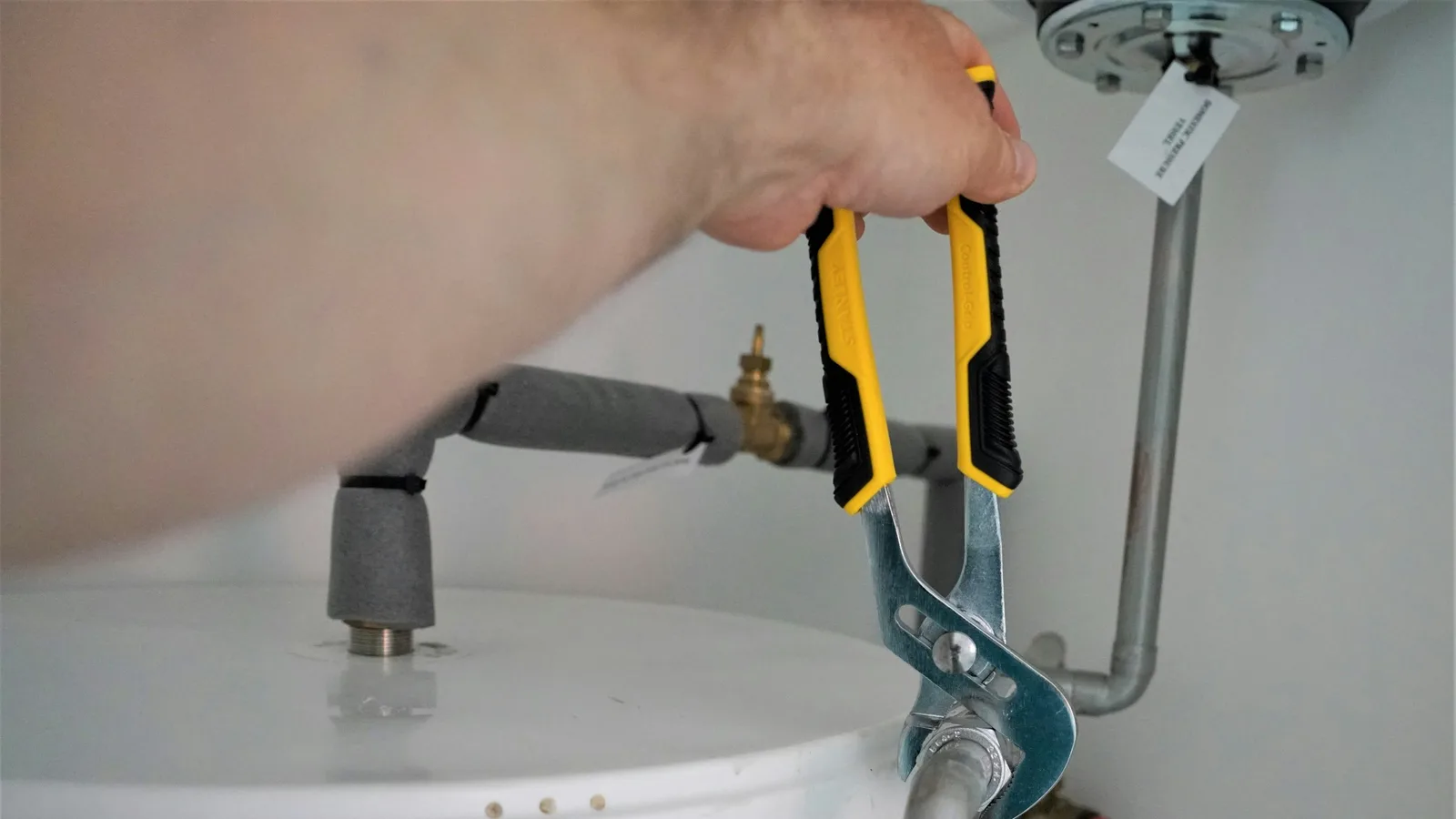
The difference between a tank that dies at eight years and one that reaches fifteen is mostly two habits: flushing sediment annually and replacing the anode rod before it is consumed. Both cost a fraction of a replacement heater.
What actually kills a tank heater
A storage water heater is a steel tank with a thin glass lining, holding hot water under pressure around the clock. Steel in hot water wants to rust, and every part of the design is a delaying action against that. Maintenance works because it maintains the delaying actions.
The two processes that end a tank:
- Sediment: minerals settle out of heated water and accumulate on the tank floor. The layer insulates the water from a gas burner, forces longer burns, overheats the steel beneath it, and steals capacity. The rumbling of an old heater is water boiling under that layer.
- Corrosion: the glass lining always has small imperfections, and the anode rod exists to corrode first at those spots. Once the rod is consumed, the tank itself starts rusting, and from that point the end is scheduled.
The annual flush
Flushing drains the sediment off the tank floor. Once a year suits most local homes, and the job takes under an hour, most of it waiting.
Turn off the heat source
Gas control to pilot or off; breaker off for electric. On an electric heater this step is not optional, since exposed elements in a draining tank burn out in seconds.
Shut the cold inlet and connect a hose
The valve is on the cold line at the top of the tank. The drain connection at the base takes a garden hose, run to a floor drain, a driveway, or outside. The water leaves hot, so route it accordingly.
Open a hot faucet somewhere in the house
This lets air in so the tank can drain, the same way a second hole lets a can pour.
Open the drain valve and let it run clear
The first water carries the sediment, often visibly gritty or cloudy. When it runs clear, briefly open the cold inlet to stir and rinse the remaining material toward the drain.
Close up in reverse order
Drain valve closed, tank refilled with that faucet still open until water flows steadily from it, then heat restored. Relighting a pilot follows the instructions on the tank label.
The anode rod, the part nobody checks
The anode is a magnesium or aluminum rod hanging inside the tank, screwed into the top. It is deliberately more reactive than steel, so corrosion consumes the rod instead of the tank. The design assumption is that someone will replace the rod as it is consumed. Almost nobody does, which is a large part of why almost no tank reaches the age it could.
The practical schedule:
- Check the rod at about year three, and every two to three years after
- Replace it when it is consumed to the steel core wire, or coated in hard calcium
- Expect the hex head on top of the tank to be very tight; it often takes a breaker bar and a second person, which is a fair reason to fold it into a service visit
- A segmented rod fits where ceiling clearance above the tank is short, which is common in closets and crawl space installations
Testing the relief valve
The temperature and pressure relief valve is the device that keeps a malfunctioning heater from becoming dangerous. It opens if the tank exceeds safe temperature or pressure, and it needs to actually work on the day it is asked to. Testing it takes thirty seconds, once a year.
Put a bucket under the discharge pipe
The valve is on the top or upper side of the tank with a pipe running down toward the floor. The water that comes out will be hot.
Lift the test lever briefly, then release
A healthy valve releases a burst of water and stops cleanly when the lever snaps back.
Judge the result
No water means the valve is seized and must be replaced. Continued dripping afterward means it is no longer sealing, and it is also replaced. Either way it is an inexpensive part protecting against an expensive failure.
Seismic strapping, which is not optional here
California requires water heaters to be braced against earthquake movement, and the standard is two straps anchored to the wall framing: one in the upper third of the tank and one in the lower third, kept clear of the controls. On the North Coast this is worth taking as seriously as anywhere in the state, since the Mendocino Triple Junction gives this county more significant earthquakes than any other part of California.
A full water heater weighs several hundred pounds. Unstrapped, a quake can walk it off its stand, tearing the gas line, the water connections, and the vent all at once, which converts one problem into three. The straps are inexpensive, the job is quick, and it is checked in any seismic retrofit or point-of-sale inspection.
Worth checking even where straps exist:
- Plumber tape or a single strap does not meet the standard and does not hold a full tank
- Straps must anchor into studs or blocking, not drywall alone
- Flexible water and gas connectors give the tank movement allowance and are standard practice with strapping
The whole schedule on one page
| Task | How often | Who |
|---|---|---|
| Flush sediment from the tank | Yearly | Homeowner or service visit |
| Test the temperature and pressure relief valve | Yearly | Homeowner |
| Inspect the anode rod | Year three, then every 2 to 3 years | Usually a service visit |
| Check seismic straps and connections | Yearly, and after any significant quake | Homeowner |
| Verify temperature setting near 120°F | Once, and after any control work | Homeowner |
| Clear combustion air openings of storage and lint | Yearly on gas heaters | Homeowner |
When maintenance stops being the answer
Maintenance extends the life of a tank that still has life to extend. A heater past ten to twelve years with a consumed anode has usually been rusting internally for years, and a first-ever flush at that age can even disturb sediment that was plugging pinholes. At that point the useful spend is on the replacement decision, sized and configured for the household as it is now, rather than on servicing the past.
Common questions
Once a year for most homes. The interval matters more in harder water, and the signal that flushing is overdue is rumbling or popping from the tank, which is water boiling under a sediment layer.
It corrodes on purpose so the steel tank does not. Once the rod is consumed, corrosion moves to the tank itself and cannot be undone. Checking it around year three and replacing it when depleted is the single highest-value maintenance a tank heater can receive.
Yes. California requires two straps, in the upper and lower thirds of the tank, anchored to framing. This county is the most seismically active part of the state, and an unstrapped tank that topples typically tears its gas and water connections with it.
No, it trades sediment flushing for scale flushing. A tankless unit is descaled with a pump and vinegar or descaling solution, typically yearly, and its inlet filter cleaned. Skipping it shows up as reduced flow and error codes rather than rumbling.
More from the knowledge base
Still stuck?
Describe what you are seeing and we will tell you whether it needs looking at now or can wait.